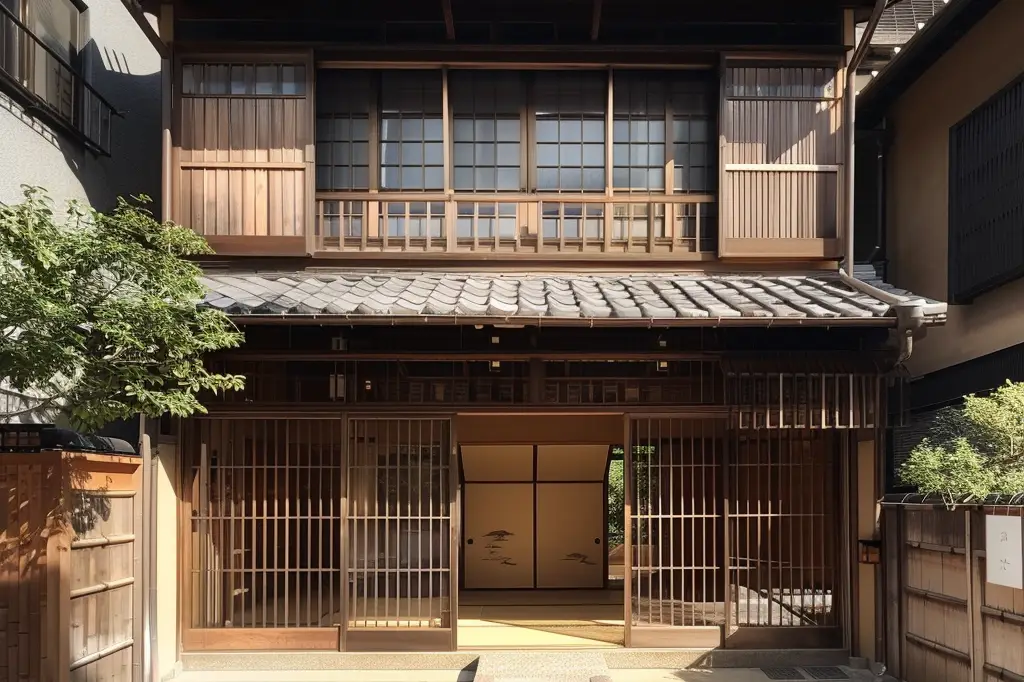
Kyoto machiya are some of the most recognizable and culturally significant homes in Japan. These traditional wooden townhouses were built for merchants and craftspeople, designed to balance business, daily life, and seasonal comfort in a dense urban environment.
Today, machiya are highly sought after for renovation, investment, guesthouse use, and long-term living. But what exactly makes a machiya a machiya?
In this guide, we’ll break down the most important machiya architectural features, including earthen walls, inner gardens, and signature layouts, plus why these elements still matter for modern buyers.

What Is a Machiya?
A machiya (町家) is a traditional Japanese townhouse most commonly found in Kyoto. Unlike farmhouses in rural Japan, machiya were built in city neighborhoods, often arranged in narrow plots with long depth. This created the famous “eel bed” layout, long and slim, maximizing frontage while keeping living space tucked deeper into the property.
Machiya are valued for their craftsmanship, natural materials, and uniquely Kyoto sense of balance between privacy and openness.

1. Earthen Walls (Tsuchikabe): Breathable, Natural, and Beautiful
One of the most important traditional machiya features is the earthen wall, known as tsuchikabe (土壁).
In renovated machiya, earthen walls are often preserved in key areas, or carefully restored to maintain the home’s original feel. These walls are made from natural materials like clay, straw, and sand layered over a bamboo lattice. While they’re visually understated, they serve an important purpose:
- Humidity regulation: earthen walls help balance moisture levels indoors
- Insulation: they offer natural thermal stability
- Texture and character: the surface has a softness and depth modern walls can’t replicate
- Traditional craftsmanship: they reflect the hands-on building methods of historic Kyoto
2. Wooden Lattice Facades (Kōshi): Privacy With Light and Air
A classic Kyoto streetscape feature is the wooden lattice facade, called kōshi (格子).
Kōshi are one of the most recognizable elements of machiya design because they allow:
- filtered daylight into the home
- ventilation while maintaining privacy
- a subtle, elegant appearance from the street
Different lattice styles can also hint at the home’s history, including whether it belonged to a merchant family or a particular trade.
3. Deep, Narrow Layout (“Unagi no Nedoko”)
Machiya were often built on narrow street-facing plots, leading to the long, deep floorplan nicknamed:
“unagi no nedoko” (うなぎの寝床) meaning “an eel’s bed.”
This layout creates a gradual transition from public to private space:
- storefront or entrance area near the street
- living areas deeper inside
- garden space and light wells throughout
It’s one of the reasons machiya interiors feel layered and atmospheric.

4. Tsuboniwa Courtyard Gardens: Light, Air, and Calm
A tsuboniwa (坪庭) is a small inner courtyard garden, usually located between rooms or along a corridor.
In traditional machiya, these gardens were essential because the long layout can otherwise feel dark. Tsuboniwa provide:
- natural light to interior rooms
- airflow and ventilation
- seasonal beauty in a compact footprint
- a calming transition space inside the home
Even tiny tsuboniwa can dramatically change how a machiya feels, especially in Kyoto’s humid summers.
5. Tatami Rooms and Sliding Partitions
Many machiya include traditional Japanese rooms with tatami flooring and fusuma (sliding partitions). These spaces were designed to be flexible:
- rooms could be opened for gatherings
- closed for privacy
- rearranged depending on season and daily use.
In modern renovations, tatami rooms are often kept as a signature feature, even if the rest of the home becomes more contemporary.

6. Exposed Timber and Traditional Joinery
Machiya are known for their timber structure, often with beautiful exposed beams and columns. Many were built using traditional joinery methods that rely on craftsmanship rather than modern metal connectors.
This is one of the reasons machiya renovations can be complex, but also why restored machiya feel so special. You’re not just buying a house, you’re buying a piece of Kyoto’s building heritage.
7. Hako Kaidan (Box Staircases)
A hako kaidan (箱階段) is a steep, compact “box staircase,” sometimes incorporating built-in storage. It’s a clever design solution in narrow machiya homes, where every centimeter counts.
It’s also one of the most charming details buyers fall in love with, because it instantly feels “Kyoto.”

8. Engawa and Transitional Spaces
Many machiya include transitional zones like:
- engawa (a narrow veranda-like edge between interior and garden)
- interior corridors with garden views
- subtle level changes between rooms
These design elements create a feeling of flow and quiet separation without needing heavy walls.
Why These Machiya Features Matter for Modern Buyers
Machiya aren’t just aesthetically beautiful, they’re designed around natural living and long-term comfort. For modern homeowners, these features offer:
- a sense of peace and privacy in the city
- unique architectural value that’s difficult to replicate
- strong appeal for guesthouse or accommodation use
- long-term cultural and lifestyle significance
In Kyoto, a well-renovated machiya can also hold strong value because demand remains high for authentic properties that preserve traditional elements while offering modern convenience.

Looking for a Machiya in Kyoto?
At Heritage Homes Japan, we specialize in Kyoto machiya and traditional Japanese properties. Whether you’re looking for a fully renovated home, a restoration project, or a property with investment potential, we can help you find a machiya that matches your goals.
To explore available properties, visit our Listings page.
If you’d like to speak with our team directly, you can reach us through our Contact page.